|
| More Analysis... Commission Analysis |
|
Chinese Government Delays Pre-Installation of Censorship Software on Computers Sold in China
China's Ministry of Industry and Information Technology (MIIT) said on June 30, 2009, that it would delay a requirement that all computers "leaving the factory and sold" in China after July 1 must have government-approved censorship software "pre-installed." An MIIT spokesperson reportedly told journalists on June 30 that "recently, a number of companies have said that the workload is heavy, the time is sudden, and preparations are insufficient. In light of the practical situation, pre-installation can be delayed," according to a June 30 Xinhua article (in Chinese). The spokesperson did not indicate how long the delay would last.
More . . .
|
Chinese Government Requires Censorship Software To Accompany Computers Sold After July 1
Chinese official censorship of the Internet is not limited to the removal of content such as pornography or content deemed to violate intellectual property rights, but also includes the removal of content the government and Communist Party deem to be politically sensitive. As such, Chinese censorship practices violate international standards for freedom of expression. Officials now have announced a plan to extend the reach of government control over Internet use by requiring all computers sold after July 1 to be packaged with a single brand of government-approved "pre-installed" filtering software. The stated aim is to protect youth from pornography, but tests show the software also filters political and religious content, and could be used to monitor computer users' Internet activity. The move has raised concerns that officials are further tightening control over the free flow of information. The short notice and lack of transparency with which the policy was introduced and its potential to restrain competition and free trade also has raised concerns over China's compliance with commercial rule of law norms.
More . . .
|
Beijing Police Formally Arrest Liu Xiaobo on Inciting Subversion Charge
Chinese public security officials formally arrested prominent intellectual Liu Xiaobo on June 23, 2009, on the charge of "inciting subversion of state power," according to the Xinhua News Agency (as reported by Singapore Lianhe Zaobao on June 24).
More . . .
|
Circular Regarding the Pre-Installation of Green Browsing Filter Software on Computers (CECC Full Translation)
On May 19, 2009, the Ministry of Industry and Information Technology (MIIT) issued the Circular Regarding the Pre-Installation of Green Browsing Filter Software on Computers, which requires that computers sold within China after July 1 must come "pre-installed" (yu zhuang) with the government-approved "Green Dam-Youth Escort" Internet browsing filtering software. Testing by outside sources has found that the software filters pornography, but it also filters specific political and religious content.
More . . .
|
Shenzhen Rights Defense Lawyer Liu Yao Released From Detention: In Final Appeal, Liu Sentenced to an 18-month Prison Term, Suspended for 2 Years
Attention to the challenges faced by China's rights defense (weiquan) community has spiked with the recent news that authorities have not renewed the lawyers' licenses of some of China's most prominent human rights lawyers. The case of Shenzhen lawyer Liu Yao, discussed below, is an example that shows that the difficulties Chinese lawyers face for taking on sensitive cases are not new. Rather, they constitute a long-standing and persistent problem for China's continued development of the rule of law.
More . . .
|
Demolition of Kashgar's Old City Draws Concerns Over Cultural Heritage Protection, Population Resettlement
Authorities in a city in western China have launched a demolition project that has undermined the preservation of a cornerstone of the Uyghur ethnic group's cultural heritage and will result in the resettlement of roughly half the city's population.
More . . .
|
Employment Discrimination Persists During Implementation of the Employment Promotion Law
China's Employment Promotion Law (EPL) took effect on January 1, 2008. Provisions in the law prohibit discrimination based on factors including gender (Art. 27), ethnicity (Art. 28), disability (Art. 29), whether or not the job candidate is a carrier of an infectious disease (Art. 30), and whether or not the job candidate is a migrant worker (Art. 31).
More . . .
|
Recruitment for State Jobs in Xinjiang Discriminates Against Ethnic Minorities
Ethnic minorities in the Xinjiang Uyghur Autonomous Region (XUAR) continue to face widespread discrimination in recruitment for state jobs, according to Congressional-Executive Commission on China (CECC) analysis of recent recruiting efforts for jobs in the Xinjiang Production and Construction Corps (XPCC) and XUAR schools.
More . . .
|
Officials Extend Liu Xiaobo's Residential Surveillance Beyond Legal Time Limit
Chinese officials continue to hold prominent intellectual and Charter 08 signer Liu Xiaobo even though the six-month limit for residential surveillance as provided for in China's Criminal Procedure Law (CPL) has expired.
More . . .
|
Xinjiang Authorities Block, Punish Free Expression
Authorities in the Xinjiang Uyghur Autonomous Region (XUAR) continued in 2009 to engage in censorship campaigns and punish people for peaceful expression and assembly. Authorities outside the XUAR also participated in the censorship of a Web site devoted to Uyghur issues. The measures continue a longstanding trend in blocking and punishing free expression in the XUAR, especially among the Uyghur ethnic group.
More . . .
|
Two Men in Inner Mongolia in Detention for Involvement in Mongolian Organization and for Planned Protest
Authorities in the Inner Mongolia Autonomous Region (IMAR) have detained two Mongol men on charges of involvement with a pan-Mongolian organization and for attempting to organize a protest, according to a May 3 report from the U.S.-based Southern Mongolian Human Rights Information Center (SMHRIC).
More . . .
|
China Requires Journalists To Obtain New Press Cards To Practice Profession
Journalists and editors at Chinese news organizations are required to possess a government-issued press card in order to legally practice their profession. This requirement differs from more limited forms of press accreditation, such as press badges required for access to certain places or events. Under China's press card system, the government has complete discretion to determine who may or may not legally practice journalism.
More . . .
|
China's Responses at the UN Human Rights Council's Universal Periodic Review
During the recent Universal Periodic Review of China's human rights record before the UN Human Rights Council, China denied the existence of human rights issues such as censorship, abuse of state secrets laws, and black jails, defended its reeducation through labor system and registration requirements for religious activity, and asserted that its laws protect workers, lawyers, and ethnic minorities. China did not support Member States' recommendations in many of these areas and called such concerns “politicized.”
More . . .
|
| More Commission Analysis. . . |
|
|
|
|
|
|
|
| Upcoming Events |
|
ROUNDTABLE
China's Human Rights Lawyers: Current Challenges and Prospects (7/10/09)
This CECC Roundtable will be held on Friday, July 10, 2009, from 10 to 11:30 a.m. in Room 628, Dirksen Senate Office Building. Panelists: Jerome A. Cohen, James V. Feinerman, Nury Turkel, and Bob (Xiqiu) Fu. CECC Roundtables are open to the press and public. No RSVP is necessary.
More...
|
| Recent Events |
|
HEARING
The 20th Anniversary of the Tiananmen Square Protests: Examining the Significance of the 1989 Demonstrations in China and Implications for U.S. Policy (6/4/09)
|
|
| Commission Roundtables and Panel Discussions |
|
- China's Human Rights Lawyers: Current Challenges and Prospects (7/10/09)
|
- The Financial Crisis and the Changing Role of Workers in China (6/19/09)
|
- What "Democracy" Means in China After Thirty Years of Reform (5/22/09)
|
- The Rising Stakes of Refugee Issues in China (5/1/09)
|
- A Year After the March 2008 Protests: Is China Promoting Stability in Tibet? (3/13/09)
|
- Does China Have a Stability Problem? (2/27/09)
|
- Human Rights in Xinjiang: Recent Developments (2/13/09)
|
- The UN Human Rights Council's Review of China's Record: Process and Challenges (1/16/09)
|
- Human Rights and Rule of Law in China: Where Are We Now and Where Do We Go From Here? (12/12/08)
|
- On the Eve of the Beijing Olympics: China's Information Lockdown (7/16/08)
|
Xinjiang: Rights Abuses in China's Muslim Western Region (5/14/08)
|
More Roundtables. . .
|
|
| Annual Reports |
|
2008 Annual Report
The Congressional-Executive Commission on China issued its 2008 Annual Report on human rights conditions and the development of the rule of law in China on Friday, October 31, 2008. Click here for the full report (text/pdf).
|
|
2007 Annual Report
The Congressional-Executive Commission on China issued its 2007 Annual Report on human rights conditions and the development of the rule of law in China on Wednesday, October 10, 2007. Click here for the full report (text/pdf).
|
| Political Prisoner Database |
|
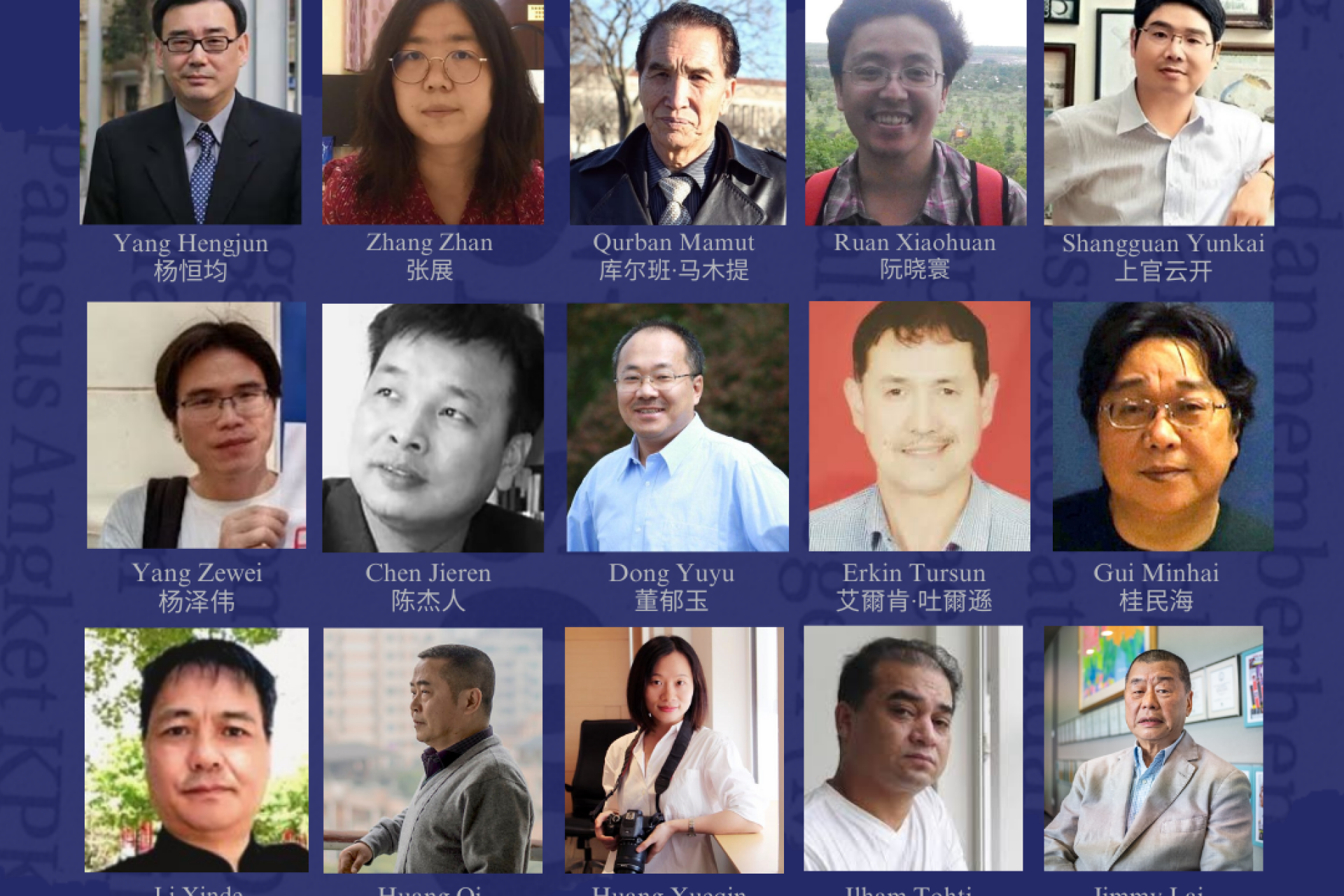
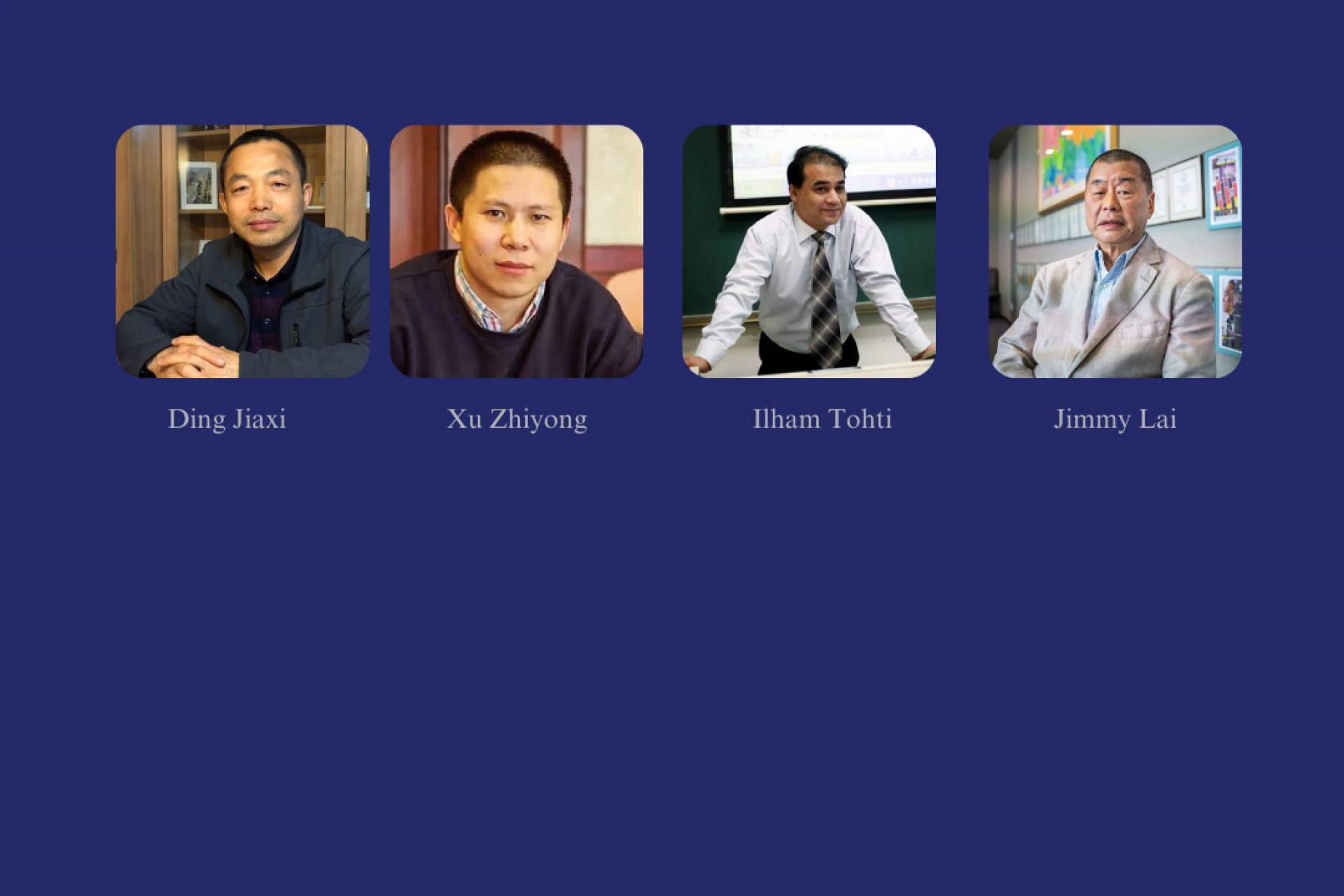
Partial List of Political Prisoners Known or Believed to be Detained or Imprisoned in China as of October 31 (1,088 Cases)
Click here to Search the full CECC Political Prisoner Database of over 4,794 cases
A "political prisoner" is an individual detained for exercising his or her human rights under international law, such as peaceful assembly, freedom of religion, freedom of association, free expression, including the freedom to advocate peaceful social or political change, and to criticize government policy or government officials. (This list of rights is not meant to be exhaustive, just illustrative.) In most cases, prisoners in the CECC Political Prisoner Database (PPD) were detained or imprisoned for attempting to exercise rights guaranteed to them by China’s law and Constitution, or by international law, or both.
|
|
Political Prisoner Advocacy
|
| CECC Special Topics |
|
Universal Periodic Review (UPR)
|
|
Charter 08
|
|
Human Rights Day 2008
|
|
- China's Olympic Commitments
- See also Chairman Sander Levin's and Co-Chairman Byron Dorgan's Statement on China's Olympic Commitments. Click here for the full transcript and supporting materials from the Commission's Hearing on "The Impact of the 2008 Olympic Games on Human Rights and the Rule of Law in China."
|
- Tibetan Protests
- See also Chairman Sander Levin's Statement on the Tibetan Protests.
|
- China's Household Registration System
- Available in English (html or pdf) and Chinese (html or pdf).
|
- Newsletter Archives
- Click here to join our mailing list.
|
|
| Commission Hearings |
|
- The 20th Anniversary of the Tiananmen Square Protests: Examining the Significance of the 1989 Demonstrations in China and Implications for U.S. Policy (6/4/09)
|
- What Will Drive China's Future Legal Development? Reports from the Field (6/18/08)
|
- The Impact of the 2008 Olympic Games on Human Rights and the Rule of Law in China (02/27/08)
|
- Human Rights and Rule of Law in China (09/20/06)
|
- Combating Human Trafficking in China: Domestic and International Efforts (03/06/06)
|
- Law in Political Transitions: Lessons from East Asia and the Road Ahead for China (7/26/05)
|
- Religious Freedom in China (11/18/04)
|
|
| More Hearings. . .
|
 |
 |
|